
Awards season is a live laboratory. Different faces, different dresses, different lighting, and the same underlying pressure: the makeup has to read as intentional from the front row to the close-up stills, and it has to hold through hours of movement, emotion, and temperature changes. After watching another cycle of red carpets and after-parties, three technical approaches kept showing up on the faces that looked the most controlled.
These are not trends. They are solutions that working artists reach for when the job has to be precise.
1. Skin that is corrected, not coated
The strongest faces this season did not wear heavy foundation as a mask. They wore targeted correction and a thin, even layer that kept texture visible. Redness was neutralized. Under-eyes were brightened without a dense triangle of product. The perimeter of the face was often left lighter so the base disappeared into the neck and ears instead of stopping in a visible line.
Why it works: Full-coverage foundation under hard flash and high-definition cameras tends to look flat or mask-like. Skin that still has some life left in it photographs as skin. The artists who nailed this used the least product necessary to even the tone, then stopped. Cream products sat on top more naturally because the base underneath was not already overloaded.
What to borrow: Match your base to the center of the face, apply it only where needed, and blend the edges as carefully as the coverage itself. If the face looks more “made up” than “even,” you have gone past the point these artists stopped at.
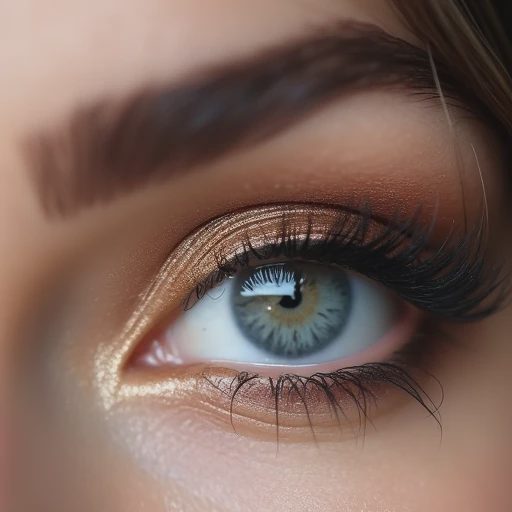
2. Eye definition that stays close to the lash line
The dominant eye shape was controlled rather than expansive. Depth sat in the crease and outer corner, but the darkest product stayed relatively tight to the lash line. Wings, when present, followed the natural angle of the eye instead of climbing toward the brow. Lashes were present and separated, not spidery or overly dense.
Why it works: A tight, precise eye reads clearly in photographs without requiring the viewer to decode a large smoky shape. It also ages more gracefully across a long evening because there is less product to migrate or fade into a muddy haze. The artists kept the upper edge soft enough to avoid a hard cut, but they did not diffuse the definition out of existence.
What to borrow: Map the shape with a medium tone first. Place the deepest color close to where you want the eye to end, then blend only the upper boundary. Keep checking with the eye open. A small, controlled shape will almost always photograph more cleanly than a large, soft one that loses its edge under flash.
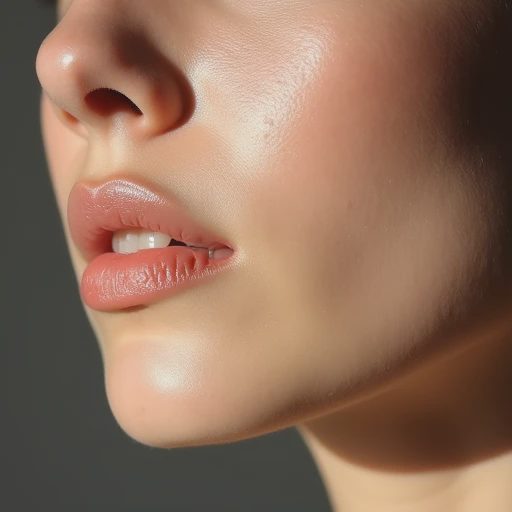
3. A lip with a finished edge and controlled finish
Whether the color was nude, rose, or a clear red, the lips that held up shared the same construction: a defined edge and a finish that did not fight the rest of the face. Some were blotted to a stain-like intensity. Others were built in thin layers so the pigment sat in the lip rather than on top of it. Extreme gloss was rare on the highest-stakes looks; when shine appeared, it was usually focused or restrained.
Why it works: A clean lip edge keeps the lower half of the face from looking unfinished once the skin and eyes are refined. A finish that is too wet or too heavy can pull attention and can also be less stable through conversation and champagne. The artists treated the lip as the final point of precision, not as an afterthought or a separate trend moment.
What to borrow: Line or map the shape, fill, then blot or layer until the color looks like it belongs to the mouth. If the rest of the face is soft, keep the lip refined rather than loud. If the eyes are stronger, the lip can take more presence—but the edge still needs to be deliberate.
The pattern underneath
None of these techniques require celebrity-only products. They require decisions about where to add and where to stop. The faces that looked the most expensive this season were often the ones with the least visible effort—corrected skin, controlled eye shape, and a lip that finished the structure. The artists who delivered that result were not inventing new rules. They were applying old ones under higher scrutiny.
I watch awards season the same way I watch any job: for the choices that still make sense when the lighting is hard, the schedule is long, and the face has to remain itself. These three kept proving useful.
If I wouldn’t put it on a bride, I won’t tell you to put it on your face.
The same techniques that survive a red carpet are the ones I trust when the stakes are personal instead of televised.
— Simone
No notes yet — write the first one.