
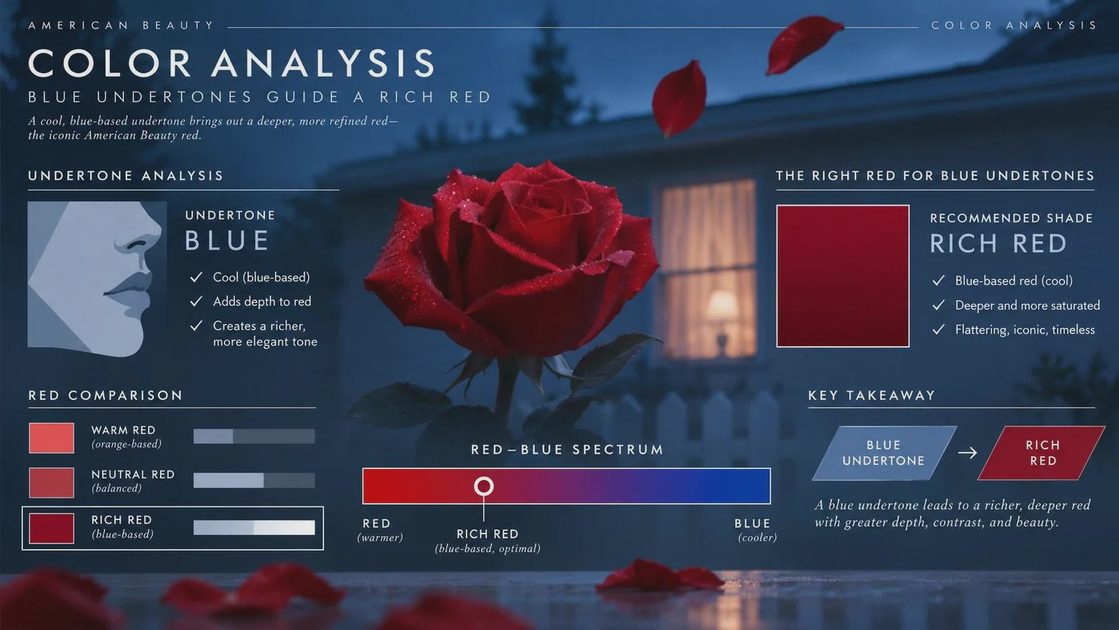
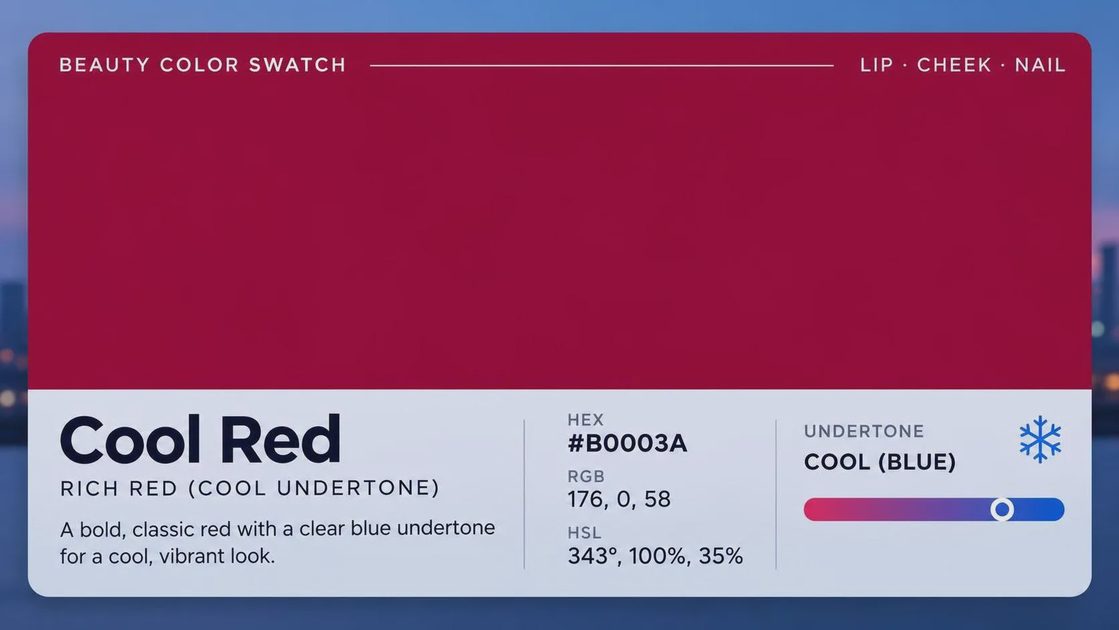
A blue based red is a red lipstick with a cool, slightly berry or pink undertone rather than an orange one. If you want that crisp, classic red lip without a warm tomato cast, start there. It can look beautiful on any skin tone; the trick is choosing a depth and finish you like, not following a rule that says warm skin must wear warm lipstick.
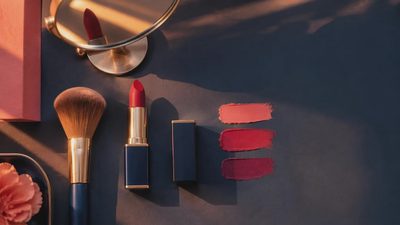
For a place to start swatching, look at MAC Ruby Woo if you want a vivid matte, or MAC Russian Red if you prefer a deeper red. Maybelline Color Sensational in Red For Me is another red to compare if you want a drugstore option. Shade and availability can change, so check the current product listing and try a swatch before buying. These are starting points for shade comparison, not claims about how long each formula will wear on you.
What makes a blue based red different?
Put a cool red next to an orange-red and the difference gets much easier to see. The cooler one tends to lean toward raspberry, cherry, or wine; the warmer one leans toward coral, brick, or tomato. Neither is better. They just create different effects against your skin and the rest of your makeup.
A blue based red does not have to look purple, and it will not necessarily read cool in every room. Your natural lip color, the opacity of the lipstick, and the lighting all affect the result. A sheer cherry can look quite different on pigmented lips than it does on the back of your hand.
People often say cool reds make teeth look whiter. The contrast can create that impression, but lipstick won't actually change tooth color, and the effect varies. Pick the shade because you like how your whole face looks in it, not because of a promise about your smile.
How to choose a blue based red for your coloring
Start with depth. If you want a bright, defined mouth, look at a vivid cherry red. For a softer effect, try a sheer berry-red or press a little lipstick on with a fingertip. If you want more drama, look for a deeper cranberry or wine-leaning red. Any of these can work across light, medium, and deep complexions; the difference is how much contrast you want.
Undertone is a useful clue, not a dress code. If a cool red feels too stark against your complexion, try a slightly deeper shade, a softer finish, or a brown-red liner blended into the edge. If it looks too pink for the classic red you had in mind, compare it with a more neutral red before assuming the formula is wrong for you.
At the store, swipe two or three shades side by side on the inside of your wrist to see their relative undertones. Then, if hygienic testing is available, check your favorite on your lips using a disposable applicator or a properly sanitized sample. Step into daylight with a mirror. Store lighting can make a red look warmer, cooler, or brighter than it does outside.
Give the swatch a few minutes before deciding. Some formulas settle to a different-looking finish as they dry, and a color you love wet may feel too flat once set. You are checking both the shade and how it feels when you talk and smile.
Prep and apply without a fussy outline
A red lip shows texture and uneven edges more readily than a nude, so spend a minute on preparation. Apply a thin layer of balm while you do the rest of your makeup, then blot off the excess. Too much slip underneath can make precise application harder, especially with a matte formula. If your lips are cracked or sore, skip the scrub and let them heal; rubbing them raw won't make lipstick sit better.
For a sharp blue based red lip, trace your natural lip line with a matching red liner or a neutral liner close to your lip color. Start at the cupid's bow, mark the center of the lower lip, and connect those points with short strokes. Fill in the corners, then apply lipstick from the center outward. A small lip brush gives you more control around the edges, though you can use the bullet directly for the middle.
Blot once with a tissue, then add a thin second coat if you want more opacity. Thin layers are easier to control than one heavy swipe, and they leave less excess product to travel. Check your teeth and the inner edge of your lips before you head out.
For a softer look, skip the liner and tap the color on with a clean fingertip, building it gradually. You get a diffused stain-like effect without needing a perfectly symmetrical outline. It is also an easy way to try a bold shade before committing to full coverage.
Make it last through a meal
No regular lipstick is guaranteed to survive every coffee, kiss, and oily dinner. Matte formulas can be a useful choice when you want less slip; creamier finishes feel more forgiving on dry lips but may need more frequent touch-ups. Long-wear liquid formulas can set more firmly, though some feel drying. Comfort matters as much as staying power when you plan to wear a color all day.
Pack the lipstick, a small mirror, and a tissue. After eating, blot any excess oil from your lips and check the center first, where color often wears away. Add a little product there and blend outward rather than repeatedly layering over the whole mouth. If the edge has smudged, clean it with a cotton swab before reapplying.
For a wedding or other long event, try your chosen blue based red for a full day beforehand, including a meal. Notice whether it transfers, gathers in lip lines, or leaves a ring as it fades. That trial tells you more about your lips and your routine than a wear-time promise on a package. The right red is the one you enjoy wearing and can comfortably touch up when real life happens.

No notes yet — write the first one.