
A bluish red is a red with a cool, slightly blue or berry lean rather than an orange one. On lips, it can look crisp and classic without actually looking blue. Start with a shade that reads unmistakably red in daylight, then adjust the depth and finish to suit your coloring and comfort. And no, you don't need a particular skin undertone to wear one.
What makes bluish red different?
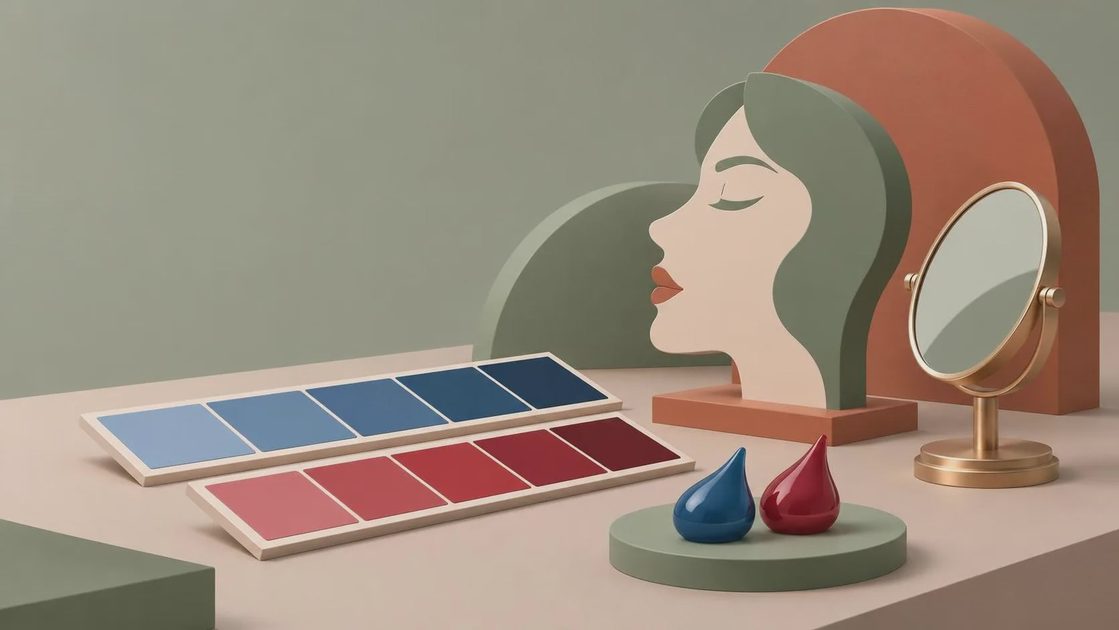
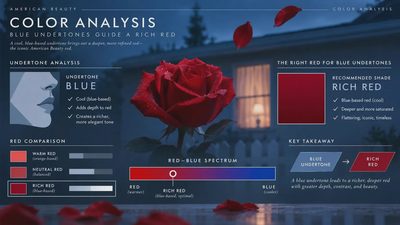
Think of red as a family, not one fixed shade. An orange-red looks warmer and more fiery; a blue-leaning red can look cooler, deeper, or a little more raspberry. Put the two next to each other on your hand and the difference usually becomes obvious. On its own, a cool red can still look like a straightforward, bold red.
Some people like the way a bluish red makes their teeth appear brighter by contrast. That's an optical effect, not a whitening treatment, and lighting and the exact shade will change what you see. Don't buy a lipstick solely for the promise of a whiter-looking smile.
The other important distinction is depth. A vivid cherry red and a deep wine red can both have a cool lean, but they'll create very different looks. If a shade feels too dramatic, try a thinner layer before deciding the color is wrong for you.
Find your version of bluish red
Look at the lipstick in the tube, but make the decision on your lips. Your natural lip color changes the result: a sheer formula lets more of that color show through, while an opaque formula covers it more completely. A berry-leaning red can look brighter on one person and deeper on another, even when both are wearing the same shade.

For a first swatch, apply a stripe to your inner arm and compare it with a warmer red beside it. Then try a clean sample on your lips if the store can provide a hygienic disposable applicator. Walk to a window or step outside with a mirror. Store lighting can make a red look warmer, darker, or more purple than it does in daylight.
If your skin has warm or golden tones, a cool red can be a gorgeous contrast. Choose a clear, saturated red if you want the lip to stand out, or press it on lightly for a softer effect. If a very purple-leaning shade feels separate from the rest of your makeup, bring a little warmth back with your usual blush rather than ruling out cool reds altogether.
On deeper skin, look at both the color and its opacity. A sheer red may read as a stain, while a densely pigmented one gives a more graphic result. Neither is more correct. If the edges look ashy or disconnected, a lip liner close to your natural lip color can help blend the transition without turning the whole lip brown.
Prep and apply without a fussy outline
A bluish red makes an uneven edge more visible, so give yourself a clean surface. Start with a thin layer of lip balm while you do the rest of your makeup. Before applying color, blot off the excess with a tissue. You want comfortable lips, not a slippery layer that lets pigment migrate.
If you have loose flakes, gently buff them away with a damp washcloth. Skip aggressive scrubs, especially on cracked or irritated lips; they can make the surface look worse and feel sore. Give damaged skin time to recover before reaching for a long-wear matte formula.
For a precise lip, start at the center of your mouth. Apply the lipstick directly or with a small lip brush, then work outward toward the corners. A brush gives you more control around the cupid's bow; the bullet is faster on the fuller center of the lip. Close your mouth gently and check that the color connects evenly at the corners.
A liner can help define the shape, but it doesn't have to match perfectly. Choose a red close to the lipstick or a neutral close to your lip color. Trace along your natural border with short strokes, then soften the line inward with a brush or fingertip. I wouldn't draw a dark, hard ring around a bright red lip unless that contrast is the look you're deliberately after.
Choose a finish for the way you wear makeup
Matte bluish red gives the cleanest, most graphic effect, but a dry formula can emphasize texture. Satin has a softer sheen and generally feels more forgiving; you'll also want to check it after eating. A sheer balm or gloss lets you ease into the color, though it won't give you the same solid coverage as an opaque lipstick.
For a stain-like finish, press a small amount of lipstick onto the center of your lips with a fingertip and blend outward. Add another thin layer where you want more intensity. This is also an easy way to make a bold tube more wearable for daytime without buying another shade.
For a sharper look, blot your first layer on a tissue and apply a second thin layer. The goal is even coverage, not a thick coat that collects along the inner lip. Check your teeth before you leave, and carry the lipstick or a small brush for touch-ups after a meal. No formula is guaranteed to survive every coffee, kiss, and dinner intact.
Make the rest of your makeup make sense
Let the lip be the focal point if that's what you love. Even out only the areas you want to cover, add mascara, and use a little blush so your face doesn't feel washed out beside the strong color. A rosy or neutral blush is an easy starting point; a warmer blush can look beautiful too, especially if it ties into the rest of your makeup.
For an evening look, add a thin line at the lashes or a soft wash of neutral shadow. You don't need to avoid eye makeup with red lips; just decide which feature you want to notice first. If the lip is the star, keep the edges of your eye shadow softly blended rather than adding several competing sharp lines.
Before an important event, wear your chosen shade through a meal and take a look in natural light. You'll learn whether you like the way it fades, how often you want to touch it up, and whether the color still feels like you after the initial lipstick thrill wears off. That's a much better test than a perfect swatch on the back of your hand.
No notes yet — write the first one.