“I just want to look like myself” is the most common request I get from brides. It is also one of the most technical. A true no-makeup makeup look has nowhere to hide. Every uneven patch, every harsh edge, and every product that sits on the skin instead of in it becomes obvious. The finished result should look like better skin and quiet definition. Getting there almost never takes ten minutes.
The last time a bride asked for this, the trial clocked in at forty-five minutes. The wedding-day version was nearly the same. Here is what that time was actually spent on.
Minutes 1–10: Skin that can carry the rest
We started with prep that matched her skin, not a generic routine. Lightweight moisturizer, sunscreen that fully settled, and a few quiet minutes so nothing was still damp. Then targeted correction only—redness around the nose and chin, a little brightness under the eyes. No full-face foundation. A sheer layer of a skin-like base worked only where she needed evening, blended until the edges disappeared into her own tone.
This stage cannot be rushed. If the skin is not even and calm, every later product sits on top of a problem instead of finishing a solution. The “no makeup” effect depends on this foundation more than on any other step.
Minutes 11–20: Invisible structure
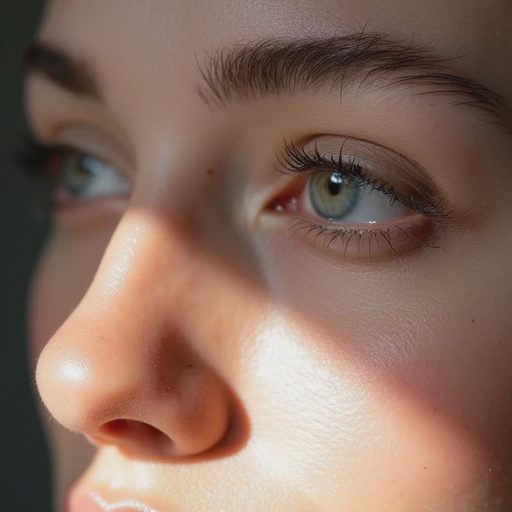
Brows were filled only where sparse, then brushed through until the product lived in the hair. No sharp tail, no heavy block of color. Cream contour was skipped entirely; a soft warm tone was tapped only where her face already had natural shadow and then blended until it read as dimension rather than product. Cream blush went onto the upper cheek and was diffused so it looked like blood under the skin, not pigment on top of it.
The goal at this stage is still skin. Anything that looks applied is too much.
Minutes 21–35: The eyes that take the longest
This is where most “quick natural” attempts fail. We used a neutral transition shade to map a soft crease, then a slightly deeper tone only in the outer third and close to the lash line. The upper edge was blended until there was no visible start or stop. Tightlining at the upper waterline gave definition without a graphic liner. Mascara was applied at the roots and pulled through in thin coats so the lashes looked thicker and darker, not coated.
Lower lashes received almost nothing. A soft wash of the same outer-corner color under the eye was diffused until it simply deepened the lash line. The entire eye had to look intentional with the eye open and still soft with the eye closed. That double-check, plus the blending, is what consumes the minutes.
Minutes 36–45: The mouth and the final edit
Lips were balanced with a neutral liner that matched her natural edge, then filled with a sheer rose that was blotted and reapplied once. The center kept a little life; the edges stayed clean but not drawn. A final pass under natural light checked for any remaining harsh lines, any product that had settled, and any place where the skin still looked unfinished. Tiny corrections only. Then we stopped.
Forty-five minutes for a face that photographs as “she’s not wearing makeup.”
Why the time is not optional
A full glam eye can disguise a lot of imperfections in the base. A barely-there face cannot. Every transition has to be clean. Every product has to match the texture of skin. The lighting on a wedding day—outdoor, indoor, flash, shade—will expose anything that was only blended under soft bathroom light. Building the look slowly, checking it, and refining it is the only way I know to make “no makeup” hold up for twelve hours and still look like the person, not like a filter.
I tell brides who want this result that we need the time in the trial and on the day. If the timeline cannot protect it, we adjust the expectation. A rushed version of this look usually ends up either too bare or accidentally heavier as the artist tries to compensate for unevenness with more product.
The larger point
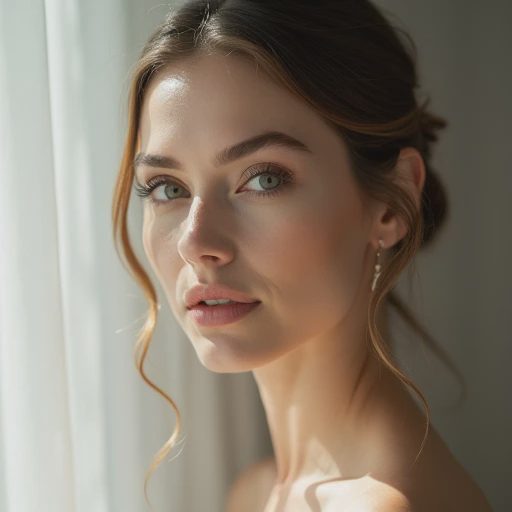
“No-makeup makeup” is a technical style, not a time-saving one. The restraint is the work. The minutes go into making every choice disappear so that only the face remains. When it is done well, people say the bride looks radiant and rested. They do not say she looks done. That is the entire assignment.
If I wouldn’t put it on a bride, I won’t tell you to put it on your face.
This is the version I will put on a bride—when we both respect how long it actually takes to make it look like nothing.
— Simone

No notes yet — write the first one.