
The best pale foundation is one that disappears into your skin without turning your face pink, yellow, or noticeably darker than your neck. Start with depth, then fine-tune the undertone, and always let a swatch dry before buying. A shade called porcelain isn't automatically your match; the actual color on your skin is what counts.
For a drugstore starting point, look at L'Oréal Paris True Match if you want a range organized by undertone. NARS Light Reflecting Foundation is worth swatching if you prefer a more luminous finish, while Estée Lauder Double Wear is an option for someone who wants a more matte, long-wearing look. These are places to start, not guarantees: shade availability and prices vary, and the right formula still needs to match your skin.
Start with depth, not the shade name
Depth is how light or dark a color looks. Undertone is the color underneath that depth: often described as cool, warm, neutral, or olive. You can have very fair skin and any of these undertones. Surface redness, freckles, and a flushed cheek can make the distinction harder to see.
Choose three shades close to your apparent depth and swipe each from the lower cheek across the jaw toward the neck. Make the stripes wide enough to see, and leave a little bare skin between them. The best pale foundation should blend in at the edge, rather than leaving a visible peach, yellow, or gray stripe.
Check the swatches near a window and, if you can, outside in indirect daylight. Store lighting can make a shade look deceptively forgiving. Wait until the swatches have dried, then look again: some formulas deepen or change color as they set or interact with skin care.
If your face is redder than your neck, don't automatically match the redness. A neutral shade that connects the face to the neck can look more balanced. On the other hand, don't force a yellow base over cool skin just to cancel redness; use a little concealer where you need it instead.
Read the undertone without overthinking it
A cool pale foundation can have pink or rosy tones. Warm shades often lean yellow, golden, or peach. Neutral shades sit somewhere between those, though one brand's neutral can look quite different from another's. Fair olive skin can have a muted greenish cast, and shades that are otherwise light enough may look too pink or orange on it.
Vein color and jewelry preferences are not reliable enough to settle the question on their own. Instead, compare swatches side by side. If a shade is the right lightness but looks distinctly pink against your neck, try a less rosy option. If it looks yellow, try a cooler or more neutral neighbor. If every option looks too bright or peachy, look for a more muted shade rather than simply going darker.
When your neck and chest are different depths, decide which area you want to connect visually. For an open neckline, a match that sits comfortably between them can look cohesive. Blend a thin veil down the jaw; you shouldn't need to paint your entire neck to make the color work.
Choose a finish for your skin and your day
A pale foundation can match beautifully and still look off if the finish emphasizes texture you don't want to highlight. For dry skin, try a hydrating or radiant formula over moisturizer that has had time to settle. For oily skin, a natural or matte finish can give you more control over shine. Combination skin often does best with a flexible finish and powder only through the center of the face.
Coverage is separate from finish. Sheer coverage lets freckles and natural color show; medium coverage evens things out more noticeably. Full coverage can be useful for an event or for covering discoloration, but it also makes a shade mismatch easier to spot. Start with less product than you think you need and add it only where you want more coverage.
At the counter, ask for a sample when available, or check the return policy before opening a bottle. Wear a candidate for a full workday with your usual skin care and sunscreen. Look at it after several hours, not just in the first mirror: note changes in color, shine, and how it sits around the nose and mouth.

Apply thin layers and correct only where needed
Prep with moisturizer suited to your skin, then apply sunscreen and give it time to settle according to its directions. Foundation with SPF isn't a substitute for a properly applied sunscreen. If your skin care pills, let the layers settle longer and avoid rubbing back and forth with your brush or sponge.
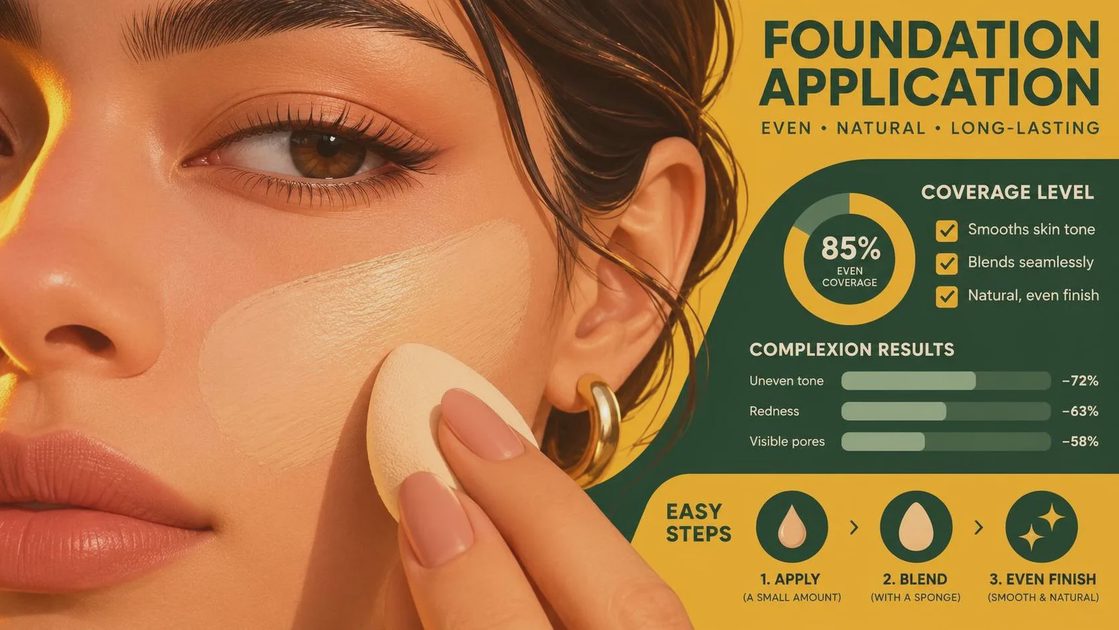
Place a small amount of pale foundation on the center of the face, where redness or unevenness often shows, and blend outward. A damp sponge gives a thinner, softer layer; a brush can provide more coverage. Press rather than scrub around the nose and over dry patches. Keep the hairline and jaw especially sheer so you don't create a visible border.
For a wedding or a long day, spot-conceal after foundation instead of building a thick layer everywhere. Use a small amount of loose or pressed powder on areas that get shiny or crease, pressing it in lightly. Too much powder can make fair skin look flat or chalky, especially in photographs. Take a photo in daylight and one with flash before the event; some products can appear lighter in flash photography.
Fix a shade that's almost right
If your pale foundation is a little too deep, a white foundation mixer can lighten it. Mix a tiny amount on the back of your hand and check the result in daylight. This changes depth, not necessarily undertone, and adding too much can alter the formula's finish and coverage.
If the depth is right but the color is wrong, a corrective mixer may help, but start sparingly. A noticeably orange or pink shade is often easier to exchange than to rescue every morning. And don't rely on bronzer to fix a mismatched base: bronzer adds warmth and dimension, while the foundation underneath still needs to make sense against your skin.
My rule is simple: choose the shade that looks quiet on your jaw after it dries, then judge the formula after a real day of wear. Your makeup should look like your skin, with a little help where you want it.




No notes yet — write the first one.