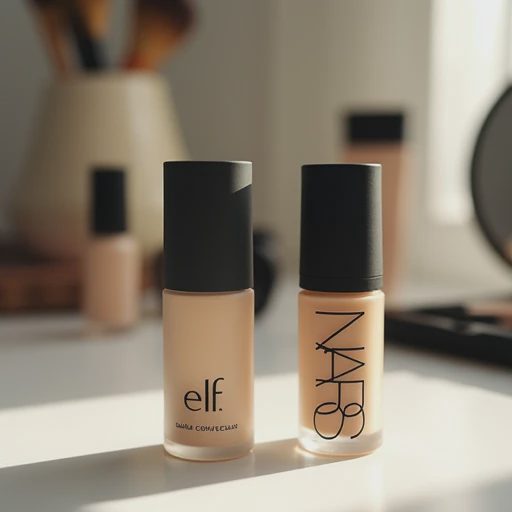
Concealer is where a lot of people overspend and under-test. The assumption is that a higher price automatically means better coverage, better wear, and a more refined finish. I wanted to see what actually held up when the only variables were the product and the face it was on.
I ran a straight side-by-side on my own skin. Same prep, same tools, same day, same twelve-hour window. One side drugstore, one side department-store. No brand money involved. Just wear data.
The setup
Skin was prepped the way I would prep a client: lightweight moisturizer, sunscreen, a few minutes to settle. I used the same dense synthetic brush for both concealers and the same light hand. No heavy color-correcting underneath. The goal was to see what each product could do on its own for under-eyes and for a couple of red spots.
Drugstore side: e.l.f. Hydrating Camo Concealer (around $7).
Department-store side: NARS Radiant Creamy Concealer (around $32).
I applied both after a sheer layer of foundation so the concealers had to blend into an existing base, the way they usually do in real life. Set lightly under the eyes with the same translucent powder. Then I left them alone except for normal blotting if the rest of the face needed it.
Immediate finish and coverage
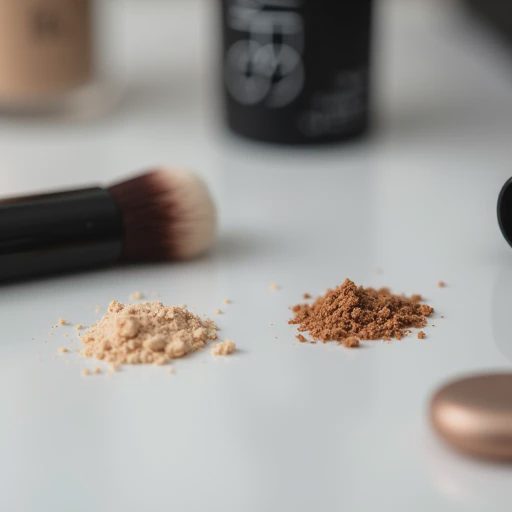
Right after application the NARS looked more refined. It blended easily, sat flat without looking dry, and gave medium coverage that still showed some skin. The e.l.f. gave stronger coverage in fewer passes and looked slightly more matte and thicker on the surface. On undereye texture, the NARS was more forgiving. The e.l.f. needed a lighter hand and more careful blending to avoid emphasizing fine lines.
For spot coverage on redness, the e.l.f. had the edge in opacity. One small amount knocked back more color than the same amount of NARS. That tracks with how I use both in the kit: the drugstore option when I need efficient coverage, the NARS when I want the finish to disappear into the skin.
Hours 4–8
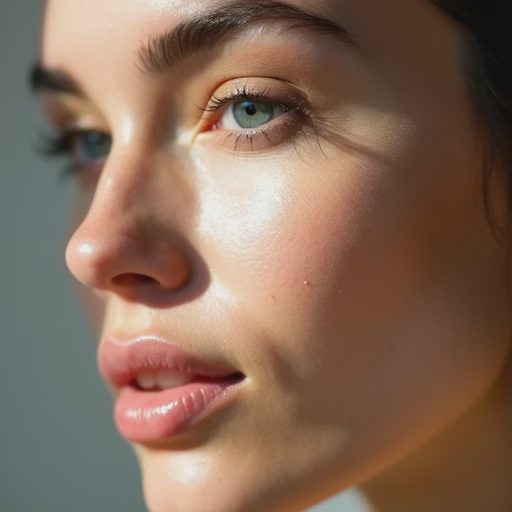
This is where most concealers show their real behavior. The NARS stayed more flexible. It moved with the skin instead of sitting on top of it. Creasing under the eyes was minimal and easy to press back in with a fingertip. The e.l.f. held its coverage longer but started to look drier and more obvious in the areas where the face folds. By hour six it had settled into the fine lines more noticeably. A quick press with a clean finger helped, but the texture difference remained.
Neither product fully disappeared or turned patchy. Neither oxidized into a dramatically different shade on me. The NARS simply continued to look more like skin. The e.l.f. continued to look more like product that was doing a job.
Hours 9–12
By the end of the day the coverage gap had narrowed. Both had faded. The NARS faded more evenly and still looked relatively smooth. The e.l.f. retained a bit more opacity in the spots but looked more textured under the eyes. For a long day with minimal intervention, the higher-priced concealer aged more gracefully. For pure coverage efficiency in the first half of the day, the drugstore option still made a strong case.
What this actually means for your face
If your priority is undetectable finish and you are willing to reapply or press product back in later, the department-store formula earned its price on my skin. If your priority is strong coverage for less money and you are careful with application and blending, the drugstore option is not a compromise—it is a functional tool.
Skin type changes the result. On drier under-eyes the e.l.f. needed more working time and a lighter layer. On oilier skin the extra coverage might last longer before the finish starts to look heavy. The only way to know is to test on your own face under the conditions you actually live with.
I still keep both. The NARS stays in the main kit for paid work when the finish has to stay refined for hours. The e.l.f. stays in the drawer for days when I need efficient coverage and do not need the product to photograph like skin at hour ten. Price did not determine usefulness. Performance in specific conditions did.
The practical takeaway
“Drugstore vs. department store” is not a moral ranking. It is a performance question. Some expensive concealers crease and separate faster than cheaper ones. Some cheap ones look thick and sit on top of the skin no matter how little you use. The face-off only matters when it is run on a real face for a real length of time.
If I wouldn’t put it on a bride, I won’t tell you to put it on your face.
Both of these have earned a place depending on the job. Neither gets a free pass because of the price tag.
— Simone

No notes yet — write the first one.