
The short answer to who invented mascara is that there isn’t one inventor for every version. Ancient Egyptians used dark eye cosmetics thousands of years ago; perfumer Eugène Rimmel is associated with an early commercial mascara in the 19th century; and T. L. Williams helped popularize a different formula in the United States through Maybelline. The tube-and-wand format in your makeup bag came later. Think of mascara as a beauty category that evolved, not a single invention with one neat birthday.
Before mascara had a name: ancient eye cosmetics
Long before a spoolie ever touched a lash, people in ancient Egypt used kohl to darken the area around their eyes. These preparations could be made from ground minerals and applied around the eyes with an applicator. They served cosmetic and cultural purposes, and were also associated with protection from the sun and other perceived benefits.
That doesn’t mean an ancient pot of kohl was mascara as we know it. Kohl was primarily an eye cosmetic used to outline or darken the eyes; modern mascara is formulated specifically to coat lashes. The connection is the much older desire for definition around the eyes, not an unbroken recipe for the product on your vanity.
So when someone asks who invented mascara, the ancient history matters, but it doesn’t produce the name of a single person. These practices developed across long periods and communities, and the surviving evidence doesn’t point to one identifiable inventor.
Eugène Rimmel and the commercial mascara story
Eugène Rimmel, a London-based perfumer, is widely credited with developing and selling an early commercial mascara in the 19th century. His name became so closely associated with the product that versions of “rimmel” are still used as a word for mascara in several languages.
Early commercial mascaras were a long way from the sleek, ready-to-swipe tubes we know. Cake mascara, for example, came as a solid product that the user moistened and worked onto a small brush before applying it to the lashes. You had to mix and load it yourself rather than pull a coated wand from a tube.
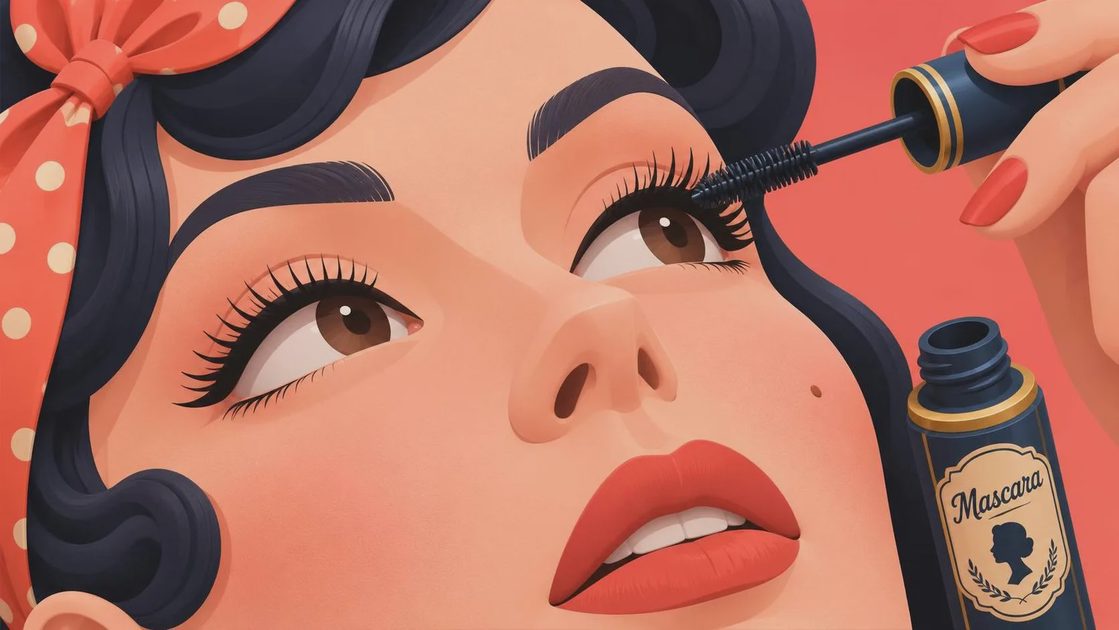
If you’re trying to settle who invented mascara at a trivia night, Rimmel is a reasonable answer for an early commercial version. Just don’t let that shorthand erase the much older history of eye makeup or the later developments that made mascara familiar to American shoppers.
The distinction matters because inventing a product, selling it commercially, and making it a daily beauty staple are different accomplishments. Rimmel’s contribution belongs in the commercial story; it isn’t evidence that nobody darkened their eyes before him.
T. L. Williams, Maybel, and the American version
Another name that comes up in the question of who invented mascara is T. L. Williams, the entrepreneur behind Maybelline. The company’s origin story credits his sister Maybel’s use of a mixture involving petroleum jelly and coal dust as an inspiration for the business. Williams began selling a lash-darkening product in the early 20th century, and the Maybelline name combined Maybel’s name with Vaseline.
The family story is a useful snapshot of the era, not a home recipe I’d recommend copying. Coal dust doesn’t belong near your eyes, and homemade mixtures aren’t formulated or preserved like commercially sold eye makeup.
Maybelline helped bring mascara to a broad American audience, including through cake formulations. That is an important chapter, but Williams didn’t invent every earlier form of eye darkener, and the original Maybelline product was not the same thing as a contemporary tube with an attached wand.
I love this part of beauty history because it makes the evolution tangible: someone wanted darker-looking lashes, a business recognized the demand, and the tools kept changing. The beauty goal is familiar even if the packaging isn’t.
How the tube and wand changed application
The next time someone asks who invented mascara, it’s worth asking which format they mean. In the 1950s, Helena Rubinstein introduced a mascara sold in a tube with an applicator, a step toward the portable, ready-to-use format that became standard. Later packaging and brush designs continued to evolve; there isn’t a clean line from one early tube to every wand on shelves today.
The practical shift was significant. A tube could hold a ready-to-apply formula, while an applicator made it easier to distribute that formula along the lashes. No separate cake to moisten, no little brush to load at the sink. For a busy morning or a touch-up away from home, that convenience made sense.
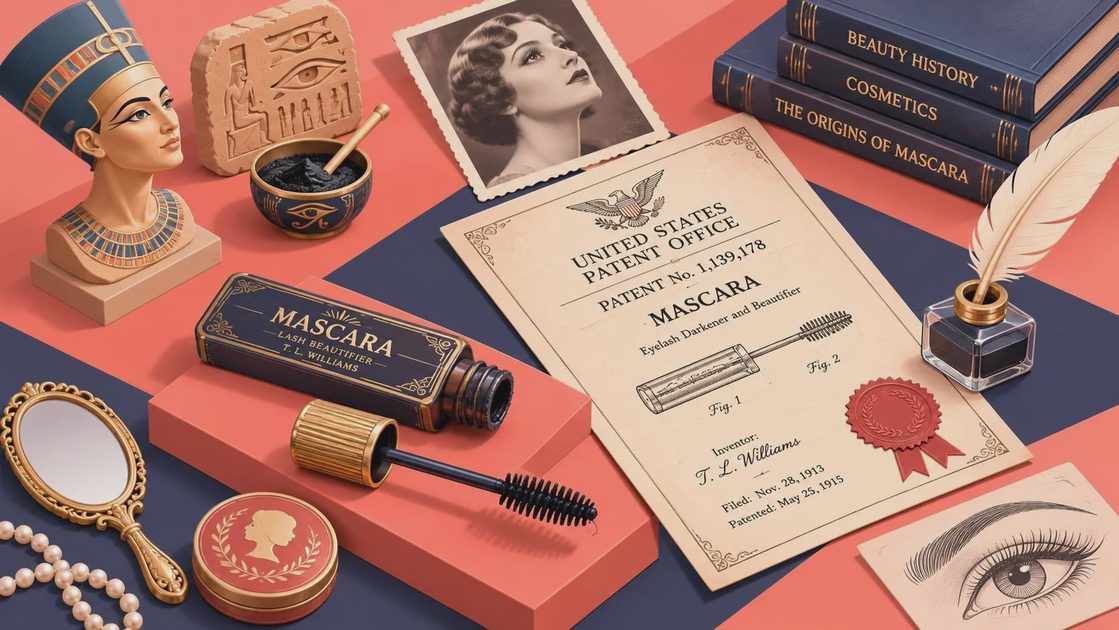
Today, brush shape and formula both affect the finish. A smaller brush can make it easier to reach short inner-corner lashes, while a larger brush can coat more lashes at once. A curved brush can help follow the lash line, but it won’t automatically curl straight lashes. That’s a job for a lash curler, used before mascara goes on.
What this history means for your makeup bag
The old question of who invented mascara is fun, but the modern question is how to use it without turning your lashes into one thick triangle. Start with the wand at the base of the upper lashes, wiggle gently, and pull through to the tips. Focus the first pass on the roots for definition, then use whatever remains on the brush through the ends. A second thin coat can add depth; piling on a wet clump is much harder to fix.
For lower lashes, hold the wand more vertically and touch the lashes with the tip. Keep a cotton swab nearby and let a stray smudge dry before gently lifting it off; rubbing wet mascara tends to spread it across your concealer.
And please skip the historical DIY. Use a product intended for the eye area, don’t share it, and follow the package’s replacement guidance. If the formula changes smell or texture, or your eyes become irritated, stop using it. With an eye infection, ask a healthcare professional about replacing eye makeup before using it again.
So, who invented mascara? Give Rimmel credit for an early commercial version, Williams and Maybelline credit for helping popularize mascara in the United States, and the long history of eye cosmetics its due. Your tube is the result of many chapters, not one person’s lightbulb moment.



No notes yet — write the first one.