Olive complexion makeup gets easier when you stop treating it like a hunt for one magical foundation shade. Olive skin usually has a green, gray, or muted golden cast beneath the surface, and that undertone changes how base products, blush, bronzer, and lipstick actually read. I've matched hundreds of faces for weddings and commercial shoots, and the same mistake appears constantly: a shade looks perfect in the store, then turns orange, pink, or strangely dull in daylight.
The fix is not piling on more coverage. It is learning what your skin is doing before you buy. If I wouldn't put it on a bride, I won't tell you to put it on your face.
How to identify an olive undertone
Start with a clean face and stand near a window, not under a bathroom bulb. Look at your jaw, neck, and chest together. If pink foundations look rosy or lavender, while yellow foundations look aggressively golden, you may have a neutral olive or warm olive undertone. Many olive complexions sit somewhere between those categories, which is why standard warm, cool, and neutral labels can feel unhelpful.
Check jewelry, but do not treat it as a final diagnosis. If both silver and gold look good, that often points to neutral undertones. Veins are less reliable than people claim because lighting and surface redness can distort them. I prefer a three-stripe test: place one neutral, one golden, and one olive-leaning shade along the jaw, then wait ten minutes. The correct one should disappear rather than look merely close.
When shopping for olive complexion makeup, search for descriptions such as neutral olive, golden olive, muted, or golden neutral. A foundation that looks slightly gray-beige in the bottle can be exactly right on skin that turns traditional beige orange.

Foundation: match the undertone before the finish
Foundation matching is where olive complexion makeup either becomes convincing or starts looking like a mask. Test two or three shades down the jaw and blend each stripe toward the neck. Do not swatch your wrist; the wrist is usually a different color and gives you bad information.
For medium coverage, NARS Light Reflecting Foundation has a broad shade range and a flexible finish that photographs well without looking heavy. Armani Luminous Silk is a beautiful splurge for normal to dry skin, though its undertone selection requires careful testing. At the drugstore, L'Oréal True Match is worth the time because the shade system separates depth and undertone more clearly than many inexpensive formulas.
If your best match is close but too pink, mix in a tiny amount of blue or olive foundation adjuster. Use a pinhead amount first; adjusters are concentrated. Too much can make the face look gray-green. If the shade is too yellow, adding more concealer on top will not solve the problem. Change the undertone at the mixing stage.
Apply foundation in thin layers with a damp sponge around the nose and mouth, then use a small dense brush where you need extra coverage. Olive complexion makeup looks most natural when the skin can still look like skin.
Concealer and color correction without the orange triangle
Olive skin often has shadows that look green-gray, brown, or slightly purple rather than bright blue. That does not mean you need a vivid orange corrector. For light to medium skin, try a muted peach or salmon-beige corrector. For deeper skin, a terracotta or warm red-brown corrector can neutralize darkness without creating a neon patch.
Use corrector only where the shadow exists: the inner corner, hollow beneath the eye, or a spot of discoloration. Tap on a thin layer, let it settle for thirty seconds, then add a skin-tone concealer. Kosas Revealer gives a flexible, creamy finish for dry under-eyes; NARS Radiant Creamy Concealer offers more coverage and survives long event days well. e.l.f. Hydrating Camo Concealer is a practical lower-cost option, but apply less than you think because it sets more firmly.
For olive complexion makeup, the concealer should match the foundation or be only one shade lighter. Two or three shades lighter creates a pale crescent that is especially obvious beside a muted undertone. Set only the crease-prone areas with finely milled powder, such as Laura Mercier Translucent Loose Setting Powder, rather than flattening the whole under-eye.
Blush, bronzer, and contour that do not turn muddy
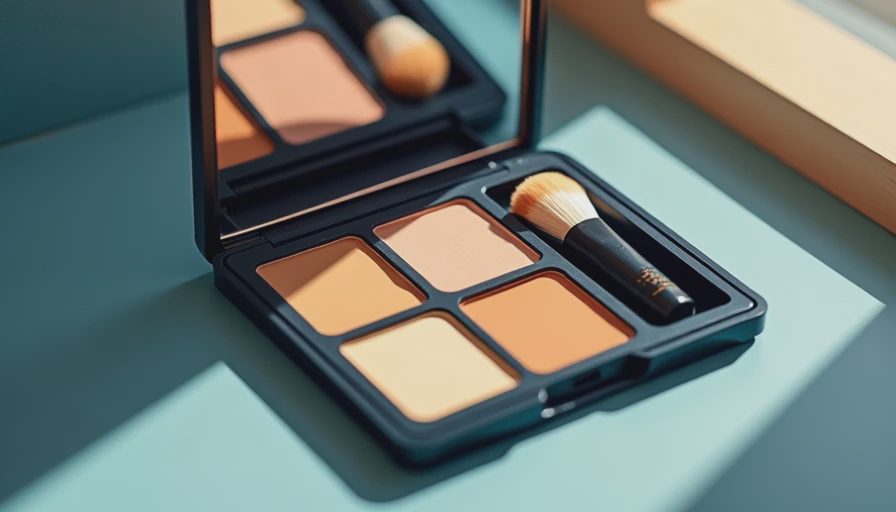
Blush is where you can make olive complexion makeup look alive instead of overly corrected. Muted peach, apricot, cinnamon rose, brick, and warm berry shades tend to sit beautifully on olive skin. Very icy pink can look chalky unless you use a sheer formula. Rare Beauty Soft Pinch in Joy is a strong warm-peach option, but it is highly pigmented; one tiny dot is enough. Milani Baked Blush in Luminoso gives a softer, budget-friendly wash with a luminous finish.
For bronzer, choose a shade that is one or two steps deeper than your skin with a neutral-to-warm base. Avoid anything intensely orange. Makeup by Mario SoftSculpt Bronzer is easy to sheer out, while Physicians Formula Butter Bronzer remains a reliable lower-cost choice for a softer finish. Sweep it across the temples, upper cheekbones, and bridge of the nose rather than drawing a stripe beneath the cheek.
Contour should be muted, not merely dark. A neutral taupe can create believable shadow, but a gray contour can look dirty against golden olive skin. Use a small brush and build slowly. I have fixed many wedding faces by removing half the contour and replacing it with blush; the result is fresher in person and better in photographs.
Eye and lip colors that make the skin look intentional
The best olive complexion makeup does not require every color to be earthy. Bronze, copper, antique gold, olive khaki, chocolate, plum, and soft terracotta are dependable eye shades. If your lids are naturally greenish, very yellow shadows can merge into the skin. Add contrast with a deep brown liner or a muted berry crease shade.
For a daytime look, press a satin bronze onto the lid, blend a matte caramel through the crease, and use dark brown liner close to the lashes. For an evening face, replace the bronze with deep olive or aubergine and keep the cheek color controlled. Urban Decay and Makeup by Mario make reliable eye formulas, but a drugstore palette can perform just as well when the shadows are applied in thin layers and not dragged over powdery foundation.
Lipstick is an easy way to test whether your undertone read is correct. Blue-reds can look crisp, but muted brick red, rose brown, fig, terracotta, and cinnamon nude are especially cooperative. MAC Chili is a classic warm brick; Maybelline SuperStay Matte Ink in Lover gives long wear at a lower price, though its liquid formula needs a light layer of balm underneath.
My 12-hour application plan
For olive complexion makeup that has to last through a workday or wedding, begin with moisturizer suited to your skin type and wait five minutes. Apply sunscreen in the daytime, then give it time to settle. Use primer only where it solves a problem: gripping primer around the nose, smoothing primer over texture, or a little mattifying balm in the center of the face.
Match foundation at the jaw, check it in daylight, and photograph it before committing. Correct discoloration in pinpoint layers. Cream blush should go on before powder, while powder bronzer and blush belong after a light set. Press, rather than swipe, translucent powder around the nostrils and under the eyes. Finish with setting spray, allow it to dry, and then inspect the face from several feet away.
Pack a cotton swab, pressed powder, lipstick, and a small concealer for touch-ups. Blot oil before adding powder, or you will create a thick patch by midafternoon. This routine has carried makeup through hot Los Angeles ceremonies, long photo sessions, and dance floors without asking the skin to look frozen.
The goal of olive complexion makeup is not to hide the undertone that makes your face distinctive. It is to choose formulas that work with its muted balance. Once your base disappears at the jaw, the rest becomes much less mysterious. Take your time with that first match, and every blush, lip, and bronzer decision gets easier.
No notes yet — write the first one.