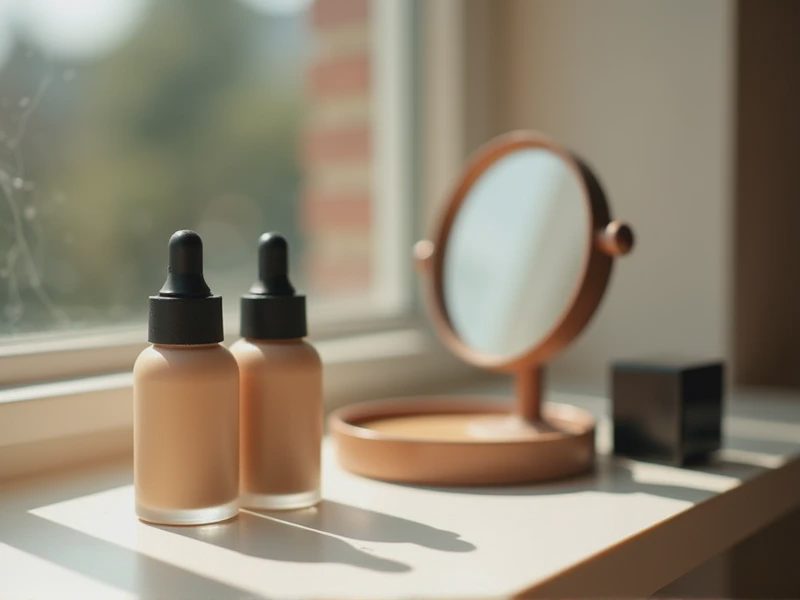
The jawline test is one of the most repeated pieces of foundation advice online, and it is also one of the most unreliable. You swipe three shades along the jaw, step into natural light, and pick the one that “disappears.” In theory it makes sense. In practice it fails constantly—especially on the faces I see in the chair.
Here is why, and what to do instead.
Why the jawline misleads
The skin along the jaw is often a different color and undertone from the center of the face. Many people have more redness or sallowness in the cheeks and forehead than along the jaw. Some have a natural shadow or a bit of facial hair that changes how a liquid sits. The jaw also tends to be slightly more muted than the areas that catch the most light.
When you match only to the jaw, you frequently end up with a foundation that is too light, too gray, or too pink once it is blended across the rest of the face. The “disappearing” stripe at the jawline becomes a visible mismatch on the cheeks under outdoor light or flash. I have corrected this on countless wedding mornings: the shade that looked perfect at the jaw was clearly wrong once it was on the full face.
Lighting in stores makes it worse. Overhead fluorescents flatten undertones. You leave with a bottle that looked seamless in the aisle and turns orange or ashy the moment you step outside.
How to actually match
Use the center of the face as your primary reference—cheeks and forehead—because that is where foundation is most visible and where most people’s discoloration lives. The jaw is a secondary check for neck blending, not the main decision.
Do this:
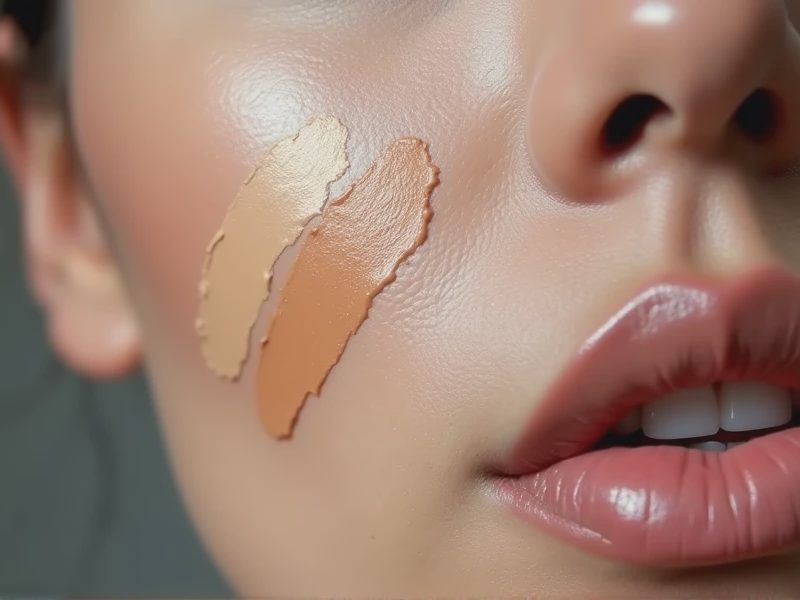
Apply thin stripes of two or three candidate shades on the cheek, not only on the jaw.
Blend each one down slightly so you can see how it sits on the skin, not just how it looks as a stripe.
Step into natural light. Daylight is the only reliable judge. If you can, check near a window and then outside.
Look at the face as a whole, not at one isolated stripe. The right shade will even the skin without creating a visible mask or a color jump at the jaw.
Wait a few minutes. Many formulas oxidize. What matches at minute one can be too dark or too warm by minute ten.
If you are between shades, the lighter one is usually safer for sheer application; the deeper one can work if you plan to use it more sheerly or mix it. When in doubt, match the undertone first. A foundation that is the right depth but the wrong undertone (too pink, too yellow, too olive) will always look off, even if the depth is close.
Undertone is not a trend
Cool, warm, and olive are not personality types. They are observations about how the skin reflects light. In the chair I still use the vein test and the jewelry test as rough starting points, but the final decision is always made on the face in daylight. Some people are clearly one undertone. Many are mixed. A foundation that is slightly too yellow on a cool-leaning face will look sallow by afternoon. One that is too pink on a warm or olive face will look flushed or gray.
If you are struggling, compare the foundation on the cheek to the skin on the side of the neck and upper chest. The neck is often a more reliable reference than the jaw for overall harmony, especially if the jaw has more redness or shadow.
What I tell clients
If the foundation looks good only under store lighting, it is not matched.
If it disappears at the jaw but creates a mask on the cheeks, it is not matched.
If it looks perfect at application and different two hours later, oxidation is the issue—try a different undertone or a different formula.
Bring your own moisturizer and sunscreen to a counter match when you can. Store lighting and rushed matching are how people leave with the wrong bottle.
The larger point
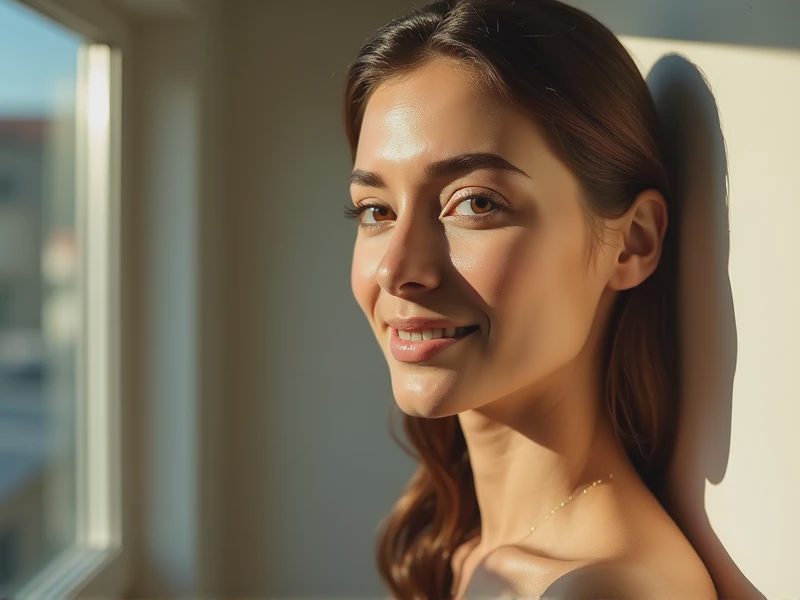
Foundation matching is not a one-swipe test at the jaw. It is a full-face decision made in the light you actually live under. The jawline can help you check the neck, but it should not be the only place you look. Center-of-face matching plus daylight plus a short wait for oxidation will get you closer than the old advice ever did.
I have matched this way on hundreds of faces. It is slower than the jawline swipe, and it is far more accurate.
If I wouldn’t put it on a bride, I won’t tell you to put it on your face.
The method above is the one I use when the match has to be right.
— Simone

No notes yet — write the first one.